
A flawed reconstruction can send an innocent person to prison. It can also let a justified shooting look unlawful, or vice versa. The stakes rarely get higher than this.
This guide breaks down what trajectory analysis is, how it's performed step by step, and why modern 3D methods are replacing traditional techniques in courtrooms nationwide.
Key Takeaways
- Trajectory analysis reverse-engineers a bullet's path from entry/exit points, angles, and physical evidence
- Rod-and-string methods carry documented measurement error; laser scanning and photogrammetry achieve sub-degree accuracy
- A defensible file runs documentation, scene mapping, position analysis, trajectory modeling, then interpretation
- Courts increasingly expect digitally verifiable reconstructions supported by documented methodology
What Is Bullet Trajectory Analysis?
Bullet trajectory analysis is the forensic process of determining a projectile's path of travel from the moment it left the firearm to where it came to rest. Analysts rely on entry and exit angles, distance calculations, and physical evidence like defect shapes and bullet holes.
This work appears in several types of cases:
- Officer-involved shootings
- Homicide investigations
- Motor vehicle shootings
- Civil litigation involving firearms
Analysts typically use one of two approaches:
- Traditional methods: Rods, string, and protractors physically trace a path through aligned holes
- Modern methods: Laser scanning, photogrammetry, and 3D software model that path digitally with greater documented precision

Why Accurate Trajectory Analysis Is Critical in Legal Cases
A reconstruction isn't just a visual aid. It's often the piece of evidence that decides who the jury believes.
Accurate trajectory work:
- Corroborates or disproves witness and shooter testimony
- Establishes whether a shooter faced an imminent threat, central to self-defense claims
- Determines the number of shooters and sequence of shots in complex incidents
- Withstands cross-examination and Daubert/Frye admissibility challenges
- Gives juries an intuitive visual understanding of complex physical evidence
- Reduces reliance on subjective interpretation of fast-moving, chaotic events
The risk of getting this wrong is well documented. A 2023 NIJ analysis of wrongful-conviction cases reviewed 1,391 forensic examinations across 34 disciplines and found errors in 635 of them.
That study wasn't trajectory-specific. It still shows forensic error carries real consequences, so reconstruction work needs a defensible, documented methodology behind it.
Courts don't automatically accept reconstruction testimony, either. In People v. Ornelas-Licano (Colorado Court of Appeals, 2020), the court excluded expert testimony linking bullet-hole shape to shot origin because the method lacked a demonstrated reliable foundation. Admissibility hinges on method validation, not just confidence in the conclusion.
How Bullet Trajectory Analysis Works – Step by Step
These steps reflect the actual forensic workflow. Skipping validation or rushing interpretation is the most common source of error in the field.
Step 1 – Document Physical Evidence
Before anything is disturbed, investigators photograph and mark:
- Spent casings
- Bullet holes and impact points
- Blood evidence and stippling patterns
This step affects everything downstream. Incomplete documentation or a broken chain of custody can undermine an otherwise solid reconstruction later in litigation.
Step 2 – Scan or Measure the Scene
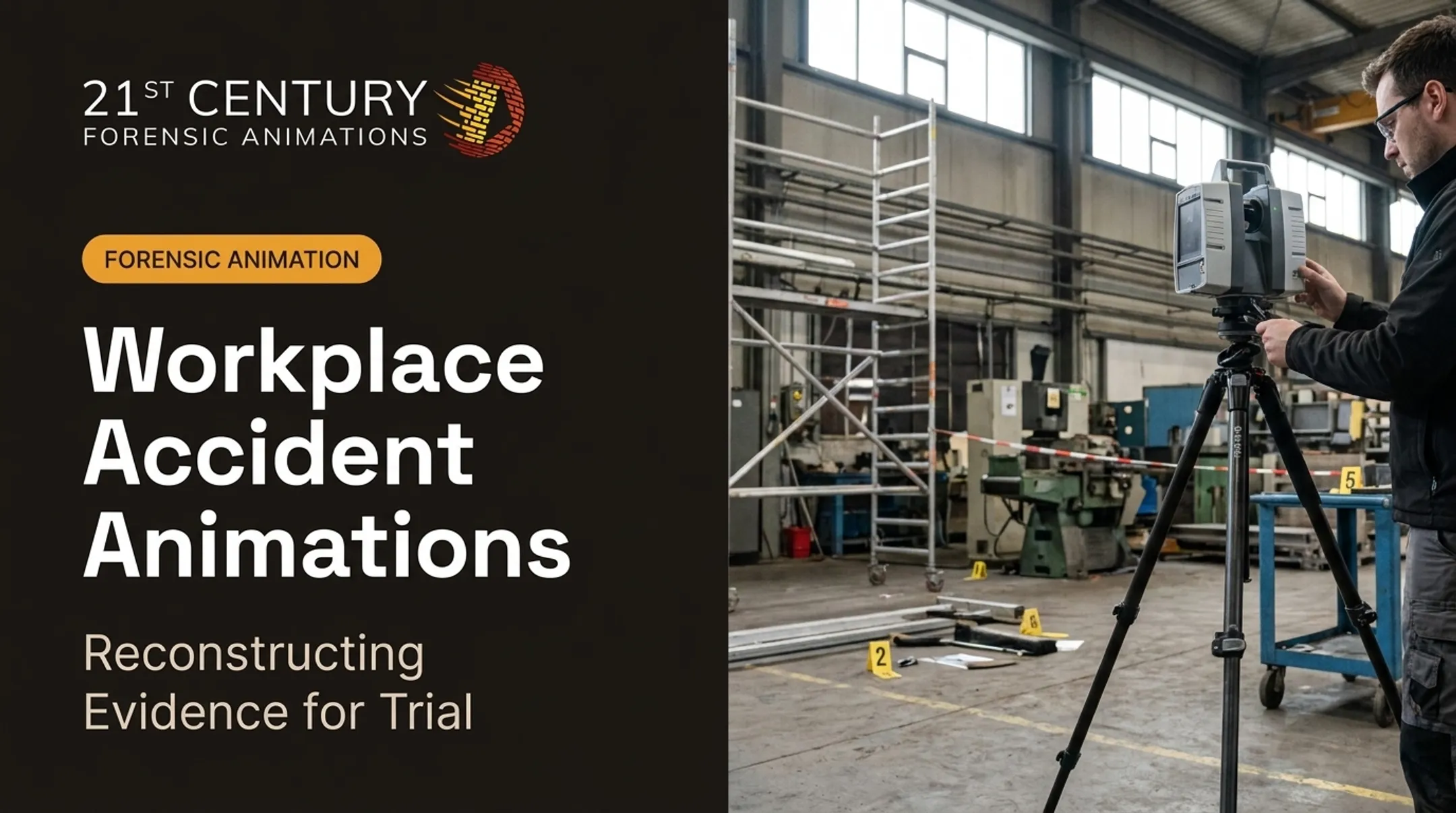
Analysts capture the bullet paths and surrounding environment using laser scanning, photogrammetry, or traditional rods and string. Precision matters here more than almost anywhere else in the process.
A 2020 controlled comparison of documentation methods found meaningful differences in accuracy. Hand measurement produced average angle differences of 1.2 degrees horizontal, while laser trajectory methods reduced that to 0.9 degrees, with camera-matching photogrammetry performing similarly well.
Small angle errors become large errors in projected shooter position over distance.
Step 3 – Determine Shooter and Target Positions
Analysts combine casing ejection patterns, blood evidence, stippling, and witness or video footage to place the shooter and target. Multiple independent sources raise confidence in the final position estimate.
Step 4 – Align and Model Trajectories
Entry and exit points are connected with modeled trajectory lines. 3D software outperforms physical string here—string can sag, stretch, or shift depending on how it is anchored.
Step 5 – Interpret and Draw Conclusions
Modeled paths become the findings that reach the jury. Clarity matters as much as accuracy on:
- Shot sequence
- Shooter location
- Target posture at impact
Given the scale of firearm incidents in the US, courts see this evidence often. The CDC reported more than 48,000 firearm-related deaths in 2022 alone, roughly 132 per day. Full trajectory reconstruction is not required in every case—but when shooter position, sequence, or posture is disputed, this workflow is what makes the conclusions defensible.

Bullet Trajectory Analysis – Example Case Walkthrough
Consider a generic officer-involved shooting scenario. An officer fires at a suspect during a confrontation. The suspect's family claims the officer fired from behind; the officer claims the suspect was facing them, weapon raised.
Investigators typically work the scene in order:
- Evidence documentation — Photograph two entry wounds, spent casings on the pavement, and a bullet hole in a nearby wall before anything moves.
- Scene scanning — Capture the full environment with a laser scanner, generating a point cloud with millimeter-level spatial data.
- Positioning — Use casing ejection patterns and a security camera's partial angle to narrow where the officer was standing.
Here's where things often go wrong: relying solely on rod-and-string trajectory tools. Rods inserted through aligned holes can lean or sag depending on hole diameter and material, introducing angular error at exactly the point where precision matters most.
By applying a documented error margin in 3D software instead, the analyst narrows the range of possible shooter positions rather than presenting a single, potentially misleading line.
In this scenario, that narrowed range either supports the officer's account of a frontal confrontation or contradicts it, depending on where the modeled cone of trajectory intersects the suspect's documented position.
How 21st Century Forensic Animations Can Help
21st Century Forensic Animations is the oldest independent forensic animation firm in the industry. For 37 years, we have translated physical evidence into dimensionally accurate, court-ready visuals.
Our ballistics work applies terrestrial 3D laser scanning and close-range photogrammetry to trajectory reconstruction and wound-position analysis for trial attorneys.
In one capital murder case, our team built a 3D reconstruction of the bullet trajectory alongside wound-position analysis. That exhibit was admitted into evidence and helped the court understand the spatial relationships that defined the shooting.

What we bring to a ballistics case:
- Precise, verifiable 3D visualizations that juries and judges can follow
- Exhibits built to meet rules of evidence in civil, criminal, state, federal, and international jurisdictions
- Complete methodology documentation that supports expert testimony
- 24/7 availability, with every deadline met
- Free consultation for first-time clients evaluating ballistics or officer-involved shooting cases
Conclusion
Accurate bullet trajectory analysis combines careful evidence documentation, precise measurement, and clear visualization. Together, these answer the questions that matter most in a case: who was where, and what really happened.
As 3D scanning and photogrammetry replace guesswork with measurable data, attorneys need reconstructions that hold up under cross-examination. Visual polish alone will not survive scrutiny.
Partnering with an experienced forensic animation team such as 21st Century Forensic Animations early in the case gives that reconstruction the best chance of holding up in court.
Frequently Asked Questions
How does bullet trajectory analysis work?
Analysts document physical evidence, measure entry and exit points, then model the bullet's path to establish shooter and target positions. Each step builds on the last, so early accuracy matters.
How accurate is bullet trajectory analysis?
Traditional rod methods carry more documented room for error, while laser scanning and photogrammetry have shown sub-degree average accuracy in controlled testing. Precision depends heavily on which method and equipment are used.
What evidence is needed to perform a trajectory analysis?
Key evidence includes spent casings, entry and exit wounds, bullet holes, autopsy reports, and scene photographs or video. The more corroborating evidence available, the stronger the final reconstruction.
Can trajectory analysis determine if a shooting was justified?
Reconstructed trajectories can corroborate or contradict claims of imminent threat by showing shooter-target positioning and body posture at the time of impact. It doesn't answer legal questions directly, but it clarifies the physical facts a jury needs.
Is 3D trajectory analysis admissible in court?
Dimensionally accurate reconstructions with documented methodology meet rules of evidence in most jurisdictions when the expert can show foundation and reliability. Admissibility turns on that foundation, not the technology alone.
What happens when a bullet ricochets or passes through an object?
Ricochet or perforation can destabilize a bullet's path, so analysts must trace deflection points and adjust the trajectory model. In these cases, 3D modeling clearly outperforms straight-line rod estimates.